- November 23, 2025
- 8 views
Okay, I think we’re good to begin. Um, today’s date is November 23rd, 2025. To start off for project updates, I am happy to share that I’ve completed an art project for Art Station. It was one of those project I thought it would be quick but it ended up taking a few extra days. I am happy with the results and everything that I learned from it. I’ll definitely be taking the lessons learned into future projects uh which will help to show the progress of my skills. And completing this project also means that I’ll get back to working on the quality assurance process for episode one of the gravitational idea series. Some sections are quick and easy, while others require a lot more time and effort.
I’m confident I’ll get it done soon as long I don’t get too distracted by side projects. The thing is I’m always open to explore great ideas if it fits within the category of the side project. This means that it doesn’t take too much time and effort away from an ongoing major project like episode one of the gravitational idea series. And all of this to say um I’m still experimenting with my workflow, and an effort to find an efficient approach to complete projects. I just have a lot of wonderful ideas and haven’t found a reasonable approach to manage them all efficiently. And with regards to this podcast and the next episode, I have been carefully listening to all the episodes to see what I can improve on. I’m starting to like the overall flow and the organic feeling of the episodes, but there’s still a lot of work to be done when it comes to the delivery. Right now, I still catch myself sounding a little nervous, almost like I’m presenting a school assignment.
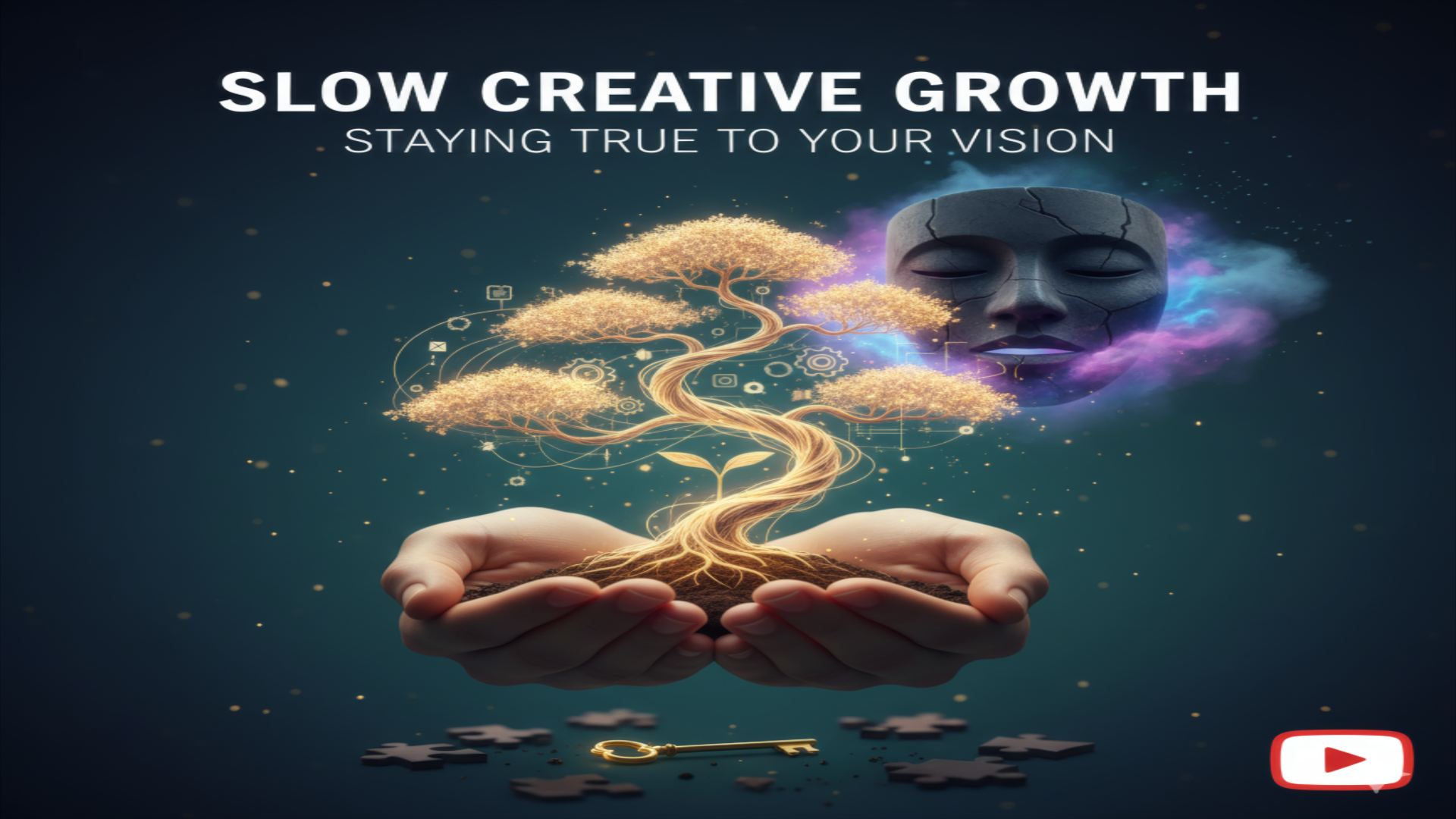
And to break this habit or feeling, I’ve decided to do multiple takes instead of the regular one to two. This way, uh I will get more familiar with what needs to be said without relying too much on the script and just talk instead of read. And uh if you listen to the previous episode, then you already have an idea what today’s topic is. So the previous episode focused on managing early success. So today’s episode will focus on managing slow growth. As an artist currently in this phase, I’ve experienced slow growth and may have some helpful advice for those in the same position or just starting out. Before I really started my journey, I did a lot of research from everything from art and ownership, monetization, uh marketing, and so much more. Uh based on my findings, I concluded that there are no guarantees, meaning it doesn’t matter how original your work is, how much effort you put in, into it or how good the quality may be, it doesn’t automatically mean your projects will get seen.
The truth is the audience through the algorithm decides what gains visibility. For example, if you publish a project and the audience doesn’t engage with it, then the algorithm might not promote it, so it might go unseen. The key takeaway from this is that the visibility of your project is not a reflection of your talent or effort, but a mix of timing, frequency, and sometimes luck. Understanding this helped me set realistic expectations for my project’s performance, which in turn gave me a solid foundation to grow from. Another important step I took before starting was not tying my sense of success to how well a project performs. As I mentioned before, I see success as a sense of movement towards something meaningful. My goal isn’t about numbers. It’s about growth. I measure my success by how much I learn, how much I improve, and how close I’m getting to becoming the storyteller I aspire to be.
To put it simply, I focus on what I can control and I try not to let outside forces like the algorithm or trends decide how I feel about my success. The final step I took before starting was I committed to stay true to myself and my vision no matter the visibility or how or how tempting it may be to follow what’s trending. Doing this also meant that I’ll have to accept the fact that growth might be slower, but it also means that connects with me first before anyone else. So even when things feel super slow, I remind myself that every step forward is still meaningful progress. With all of that being said, I want to make it clear that while art is subjective, there’s still a general consensus of what is considered acceptable. Recognizing this helps you stay grounded while continuing to developing your own artistic voice and vision. By studying many different styles of art and mediums, you gain new perspectives that you can that can help improve your art over time.
So, for this next section, I want to touch on trends in popular art. And when I say art, I’m talking about everything from visual art to video to music and more. As you know, art is subjective and there’s no exact formula for measuring its value or quality. And the thing is, our brains naturally prefer things that are familiar and easy to understand. We look for patterns. We look for things we can quickly process and label. So whenever anything new is introduced, we look for similarities or in this case, we look for what’s popular because a large number of people have already processed it and gave it values and label. As a result, many artists will take proven successful elements and produce art that is familiar, recognizable, and easy to quickly label. While this approach can lead to a repetitive cycle where originality struggles to stand out, change always finds a way. This change usually happens when something different manages to break through the noise.
What may start as something small and unconventional begins to reshape what is considered popular art. Over time, that one small and unconventional art becomes a new standard for popular art. Now, I believe I said everything that I wanted to say. So, to conclude this episode, I want to remind you that slow growth isn’t a setback. It’s an essential part of development. Every project, no matter how small or unseen, contributes to your growth as an artist. The key is to stay focused on what you can control. Things like your consistency, your willingness to learn, your awareness, and your commitment to your unique vision. Trends will come and go, algorithms will change, but the art you create will have a lasting value. So, if you’re in a phase where progress feels slow, remember that you’re still moving forward. You’re building skills. You’re building character and shaping your voice in a way that quick success doesn’t always allow.
So, my advice to you here is to Just keep going, stay patient, and trust that your growth is leading you where you need to be. So until next time, take care.