- July 8, 2026
- 0 views
All right, we’re good to start. Today’s date is July 3rd, 2026. I was off work this past Wednesday thanks to a holiday which gave me the opportunity to work on sever full scripts for upcoming episodes. I have some family activities coming up soon, so I made sure to take advantage of Wednesday because I won’t be working on personal projects for a while. Personal projects are fun and a huge passion of mine, but my family and friends mean a lot more to me, so I’ve learned to dedicate a reasonable amount of time and space for them. Of course, this is easier said than done because things are always changing with uh with unpredictable tendencies.
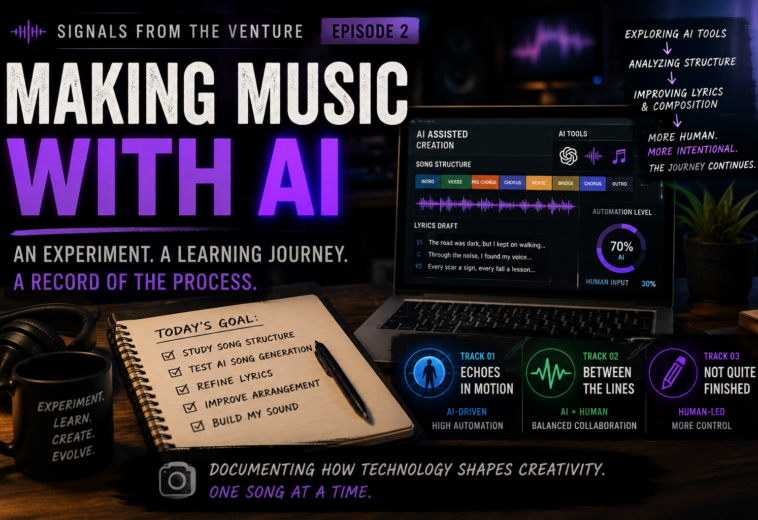
So, I’ve been constantly working on balancing things out and adjusting accordingly. Now, moving on to project updates. I’m happy to have published the second episode of the audio series, Signals from the Venture. I introduce and play three AI generated songs using Suno. Uh since then, I’ve been actively listening to the episode to identify areas for improvement and most importantly deciding on the next set of songs and my level of input with them. This is because I had a somewhat of minimal input with the generated songs. So, I want to start uh I want to take some control to start creating some unique songs. Now, on to an ongoing major project. I’ve made some progress on the teaser video for the upcoming short film, Disconnected Part One. I have decided on the first two scenes and just finalizing the VFX shots for them. I’ve pulled together um a bunch of environment assets, characters, Now just analyzing a number of scenes to include and character designs.
While I wanted to have this video project completed by the end of June, it will most likely be by the end of July. Of course, this can always change. The last set of updates are organizational just based on the simple fact that I’m seeking efficiency and preparing for phase 2. To put it simply, I have a bunch of assets sitting on my hard drive with no labels or folders. So, it takes a while for me to find the appropriate assets to keep things is moving forward with regards to the preparation of phase 2. I have decided that I’ll be using a majority of Cinti assets for a lot of the videos in phase 2. So, I’ve organized the folder only for Cinti assets. This is a cost-effective decision because I won’t have to buy more assets to complete certain videos and it also reduces the completion time because all the assets are low poly.
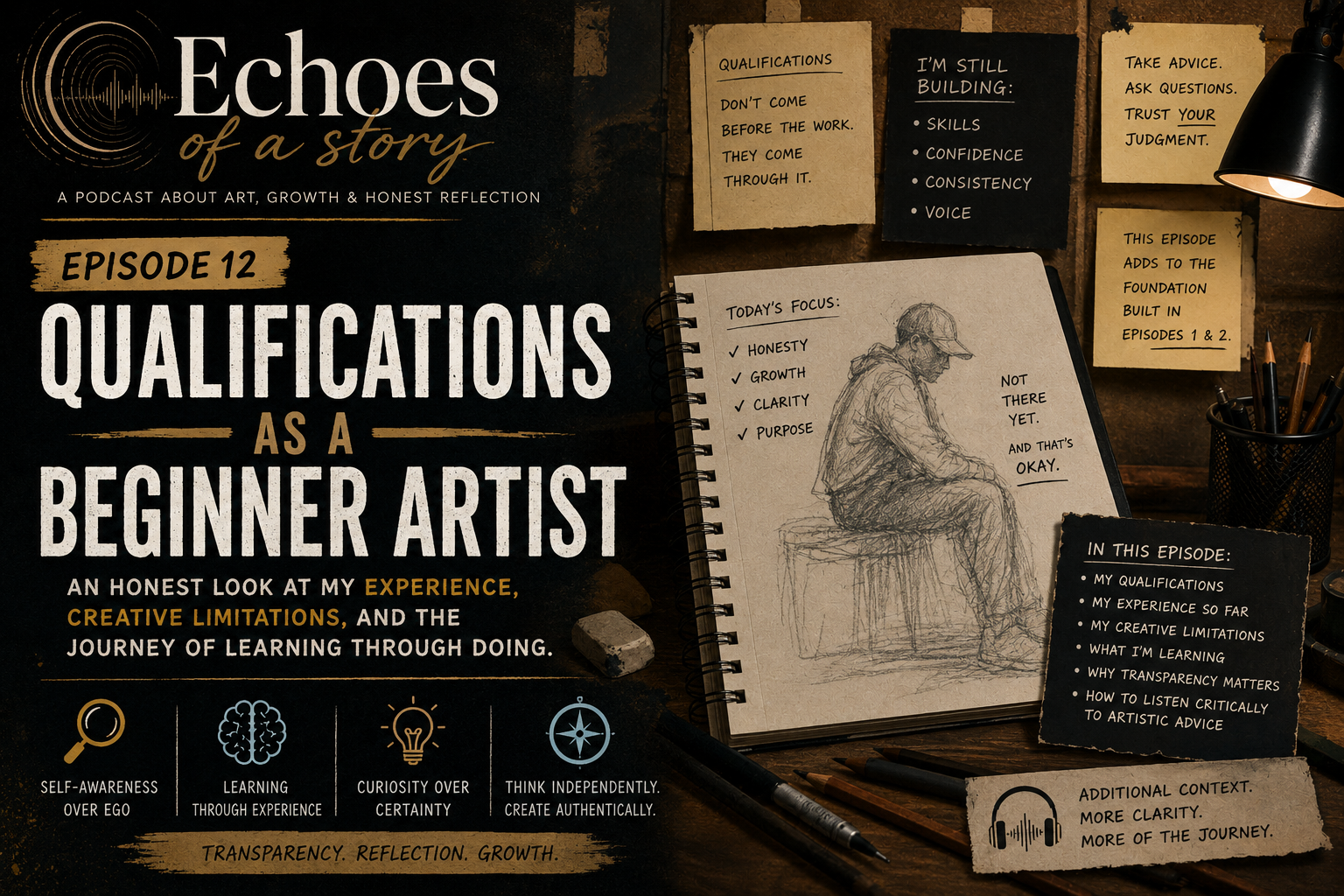
Now, for the episode recap, in the last episode, I shared my experience of working alone as a creative artist with the primary focus on balancing creative work to avoid burnout and developing healthy systems that support steady and sustainable growth. Like with all episodes, I provided recommendations for rest, recovery, and maintaining routines that encourage long-term creativity without sacrificing overall well-being. Because I often encourage new artists to maintain a healthy level of skepticism towards everything they hear and see, I wanted to take this opportunity to be transparent about my qualification as a beginner artist, not to mislead anyone, and to remind artists and listeners to approach my recommendations with a healthy dose of skepticism and discernment. Back in late 2025, I published the first two episodes of this audio show.
I briefly talked about skepticism and um using rules as guiding principles and I also provided some recommendations. Unfortunately, I did not provide my qualification or years of experience because my focus was on building a foundation for this audio show. Currently speaking, I have established a good foundation that will soon become solid after 30 episodes. I’m currently at 11 episodes, so stay tuned for that. Now, getting straight to the point, I have no qualifications whatsoever as an artist. This means I did not go to school for anything art related, and I do not have any certifications or parents or friends who are artists. And I’m not following in the steps of any artist. So, you may ask, why are you pursuing art? Why give recommendations for something you don’t have any qualifications for? And what makes your recommendations valid? And to that I say, great questions and you have every right to be skeptical and take it as unreliable.
My reasons for giving recommendations are just based on the fact that there are more similarities and differences across discipline and as a result many lessons learned can be successfully transferred over to produce similar even better results because I’m naturally curious. I have a tendency to consume a lot of random information which unfortunately includes a lot of unreliable information but at the same time there are few valuable and useful information through the lens of balance, skepticism and discernment. Additionally, the recommendations I provide are not only for aspiring artists but for myself as well. I too aspire to be an artist based on my goal and I’m also documenting my journey to lay the blueprint for those with similar aspirations to follow or to take the pieces they find informative and useful. For this next section, I want to talk about the advantages and disadvantages based on my lack of qualifications and experience.
To start off with the disadvantages, I did not have the structural environment where there was guidance and foundational knowledge. As a result, I have weak artistic principles, lacking historical and technical context within our disciplines, and I sometimes struggles to prioritize what skills should be focused on and this leads perfectly into the next disadvantage. I have a slower development progression since my learning approach requires a lot of time to develop due to inefficiencies as well as more time for trial and error to achieve consistency. The last disadvantage I would like to highlight is the unrefined skills and execution. Since I’m involved in different creative fields, my attention, my time, and my energy are constantly divided, which takes away from fully concentrating and mastering a specific skill.
This makes it extremely difficult to bring ambitious ideas to life because my skills are not sufficiently refined and is lacking the technical expertise to fully execute an entire idea. Despite the disadvantages, there are a few key advantages that come from self-directed learning without the formal qualifications or formal training if I may say or the traditional structural path. The first advantage is the flexibility in learning and creative direction. Because I’m not tied to a specific institution or rigid methods, I have the freedom to explore different styles, techniques, and disciplines without the need of permission or approval. This allows me to explore my curiosity at any time, shift focus, or pivot to another project when my skills are not yet sufficient to bring an idea to life. The second advantage is cross-disciplinary thinking.
Since I’m involved in different creative disciplines at the same time, I naturally notice this patterns, similarities, and transferable principles. For example, taking concepts from one discipline to another leads to things like unconventional problem solving, unique skills, and creative ideas. The last advantage is self-awareness through documentation. Because I’m actively learning in public and reflecting on my own process, strength, weaknesses, and growth, I have developed a better understanding of myself and my capabilities. This documentation process has created a feedback loop where it’s not only about the process but also about understanding how and why the projects are developing the way it is. To summarize this entire section, my advantages do not replace any formal training or a structural experience, but it does offer a different type of learning approach. This approach is more experimental, completely self-directed, and more reflective in nature.
While it does come with its own set of challenges and inefficiencies, it does offer another way to become a creative artist. For this last section, I would like to elaborate on the first two topics that I published for this audio show. While I was satisfied with what I said, I would like to add a little bit more to explain things better and also make a note about updating stances that might have changed. I’m open to admitting when I’m wrong, so I don’t mind highlighting things when I change my stance on it. To begin with, the episode title, skepticism and consumption and learning. The key takeaway was on the importance of maintaining a healthy balance of skepticism towards everything we consume. Especially in this day and age of algorithms, endless information, and fast-paced content, not everything that sounds convincing is necessarily accurate, useful, or applicable. So, it is very important to personalize the things you decide to copy based on your own circumstances.
Or you may end up trapped in cycles of following advice that is no longer applicable or not designed for you. One of the most common mistakes people make when consuming information is that success automatically validates every decision, opinion and recommendation made by the successful person. The unfortunate reality is that sometimes people succeed because of timing, luck, connections, unique circumstances or strengths unrelated to the advice given. That’s all I wanted to add for that episode. Now, moving on to the next episode title, using rules and standards as guiding principles. The key takeaway were to view rules, standards, and any type of established principles as a guide instead of absolute rules that must be followed and met.
While I understand that many artistic rules and principles exist to help artists to avoid common mistakes and communicate ideas more effectively, I’ve also found that those same rules and principles also confine and restrict artistic flexibility and experimentation. From a historical context within most creative fields, there’s a tendency for popular projects to be overly analyzed and categorized, which eventually leads to rules and principles being built off them because of their success. Over time, the same rules and principles become treated like universal laws, even though there is just observations drawn from a specific context. In a similar manner, history has continually shown us that creative breakthroughs have happened as a result of people deciding to question, to bend, and completely step outside of the established rules and principles. So, the main message here is to be mindful of the fact that most artistic rules and principles are built off popular work.
And that you should not be afraid to step outside of those established rules when it is necessary or when the creative direction calls for it. To conclude today’s episode, I wanted to connect everything into the theme of balance. Whether it’s skepticism and learning, understanding artistic rules, or reflecting on my own lack of qualifications, the one common theme throughout all of these topics is the importance of thinking independently while still being open to learning from others. As I continue to develop as an artist, I am fully aware that my perspective will continue to evolve. And I’m emphasizing evolve because every time I hear myself say it in these audio shows, it sounds like I’m saying revolving instead of evolving. Anyways, just be mindful of the fact that my recommendations are subject to change with experience. So, it shouldn’t be taken as absolute.
And most importantly, I strongly encourage everyone to apply your own judgment, skepticism, and personal context when engaging with anything I publish. And speaking of publishing, it has been a blessing to document and share my journey publicly. It has allowed me to stay accountable, observe my own progress more clearly, as well as provide more detailed insight or relatability to those with similar aspirations. And with that being said, I will continue to work on improving my process uh including these audio shows and all other projects. So until next time, take care.