
- December 22, 2025
- 24 views
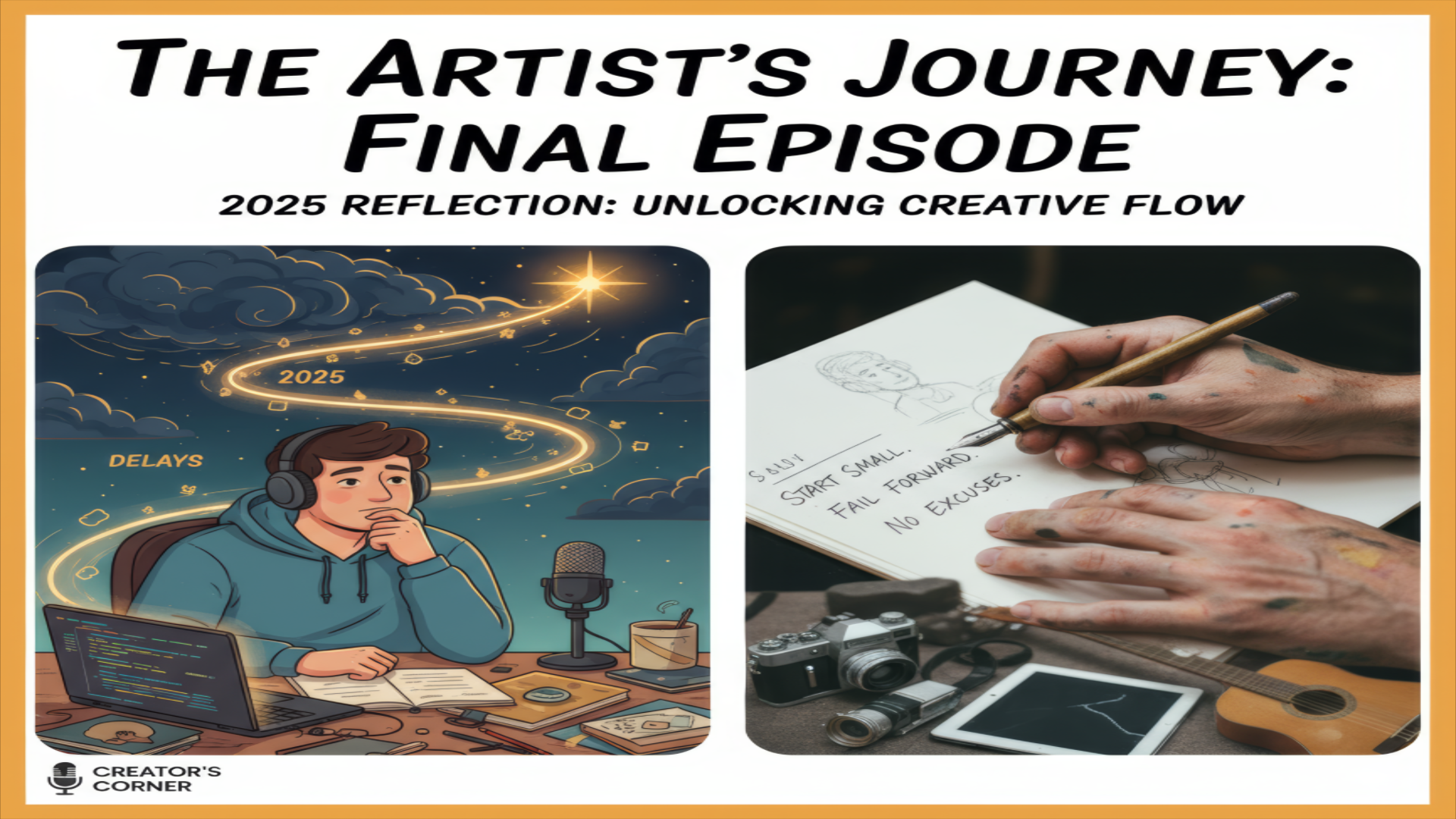
Okay. So, today’s date is December 21st, 2025. And based on this date, it will be the last episode of the year, 2025. And wow. What a year has been. I published the first episode of this new audio series on August 3rd and with today’s episode, there will be a total of six episodes published. I am very proud and happy with the results and excited for all future episodes. Now, throughout the time of working on these episodes, I was also working on a major project called gravitational ideas episode 1. And while the expectations to complete this project was around late November or December, it doesn’t look like I’ll be able to meet this expectation just due to new challenges that have come up.
So, with that being said that I have developed a new system that is less dependent on the major project to keep things moving forward. This new system includes complimentary side projects that do not require too much time and effort and most importantly it expands my skill set. Uh with regards to journal updates I’ve made a number of changes to make this audio series more available and discoverable. Upon further research into Patreon’s podcast hosting it seems to be a very exclusive model or people can only really discover if someone happens to be a Patreon or the RSS feed link is shared. So based on this fact, I went ahead and duplicated this podcast show on Spotify. Now it can be easily searchable and recommended as well. It can also be added to Apple podcasts with the RSS feed link. So, I might post the link on the description of this episode. All right, I think that covers everything and we should be good to start today’s episode.
As I mentioned in a previous episode, I did a lot of research into everything art-related. And it included a number of lessons on things to embrace, pursue, and avoid. And based on these lessons, I carefully structured my projects and mindset to check off all the boxes to do things the right way. Now, you might already see the red flags with this approach and possibly suggest do things your own way or say things like there’s no such thing as the right way or embrace your imperfections. Well, these suggestions are all great. Um, it is some on ineffective and can um can halt or stunt the growth of new artists. This is due to the fact that you know uh worries don’t always translate well into action especially when it’s dependent on a new artist. For example, everyone sees and approach things differently based on their experiences, resources, time, and value. So, not everything might be applicable and may require some revisions or possibly removal because it could be counterproductive.
So, in this episode, I want wanted to take the time to share the lessons I initially adopted for my projects and mindset and how I have transformed them through firsthand experience to better fit my needs and objectives. So, my journey into art began many years ago and during my time of learning tutorials and test projects. I adopted lessons like practice makes perfect, comparison’s a thief of joy. There is no such thing as perfection. Always complete what you start. Create the things you want to see and hear. consume all types of mediums. Constraints are a blessing in disguise. While there’s a lot more lessons I’d like to go through, there is one that is that is the central focus for this episode, and it goes something like, “It’s not the software or the equipment, but your creativity.”
Today, I can easily understand and create beautiful works of art with my current software and equipment. Unfortunately, I can’t say the same thing about my younger self because I hadn’t yet learned how to navigate through my limitations and build a strong uh foundation. You see, all I wanted to do was skip ahead and achieve the same results as the tutorials. And as a result, I felt short every single time. Through failure, I would then blame the software, the equipment, or the lack of time rather than my own lack of understanding. Luckily for me, I never stopped trying. I continued to work on areas that were not on the level with the tutorials and references I was looking to achieve. While I gradually improve, the most consistent challenges were always on the software equipment and time. This always kept me from exploring a wide range of projects and building a solid foundation. And as time went on, I eventually acquired the funds to upgrade my software and equipment. My skills had significantly improved in several areas that I started to embrace my own art.
Not through comparison this time around, but through my creativity to problem solve around my limitations. Today, I have acquired more than enough software and equipment And while time is limited, I’ve managed to do the best that I can. Major projects do take a significant amount of time to complete. So, I have solved this by diversifying my time into smaller complimentary side projects to allow me to keep moving forward and improve. My key takeaway from this lesson was that I was afraid of not being good enough. It quietly shaped my habits and my mindset to hold myself back by waiting on the perfect software, equipment, and more time. While I’ll like to say that I fully grasp this lesson today, I have noticed similar traits and patterns while working on episode one of the gravitational idea series. For example, I still find myself hesitating, overanalyzing, delaying progress, which are clear signs that I’m still dealing with perfectionism in some form.
This means that this this lesson will continue to be a work in progress. So, as long as I’m aware and continually working on it, I’ll be happy. For this next section, I want to focus on new artists who are just starting. While much of What I said can serve as a cautionary tale and highlights important things to be mindful of. It is equally important to personalize these ideas based on your own circumstances like your goals, the resources you currently have available. It is very common to encounter the challenges of choosing the right software, managing limit limited resources and finding the time to bring your ideas to life. The key is to start small and be resourceful. For example, start with beginner-friendly software and equipment that have an easy learning curve and gradually expand as you gain a better understanding and your skill set improves. Also remember that high-end software and equipment won’t automatically solve your creative challenges.
It can sometimes hold you back by distracting you from learning the fundamentals. To conclude this episode, it is important to remember that not every lesson can be learned from a book or tutorial. Some of the most meaningful lessons only come through firsthand experience. And it is through this direct experience that truly shapes and refines your creative process. Without this direct experience, it is easy to fall into repetitive patterns, making the same mistakes without fully understanding why. This is why it is so important to embrace the journey, allowing yourself the time and space to learn, experiment, and adapt along the way. In doing so, you not only grow as an artist, but you also also in your understanding of how you think, create, and express yourself. I believe that’s it for me. Until next time, take care.

